
Godists have their own bogus epistemologies, designed to rationalize believing in gods. But rational people use only godless epistemologies, which aren’t rigged to favor any conclusion. I have long advocated Bayesian Epistemology as the correct logic for knowing what to believe and how confidently to believe it. So I realize I need to add a primer for studying that to my philosophy recommendations page. There is a good two-volume set for that that is a great place to start. But I have a surprise third example that you might not realize is an example of Bayesian reasoning, and how to apply it broadly and colloquially.
I get a commission on anything you buy on Amazon after clicking any link on my website. In fact I get a commission on everything in your cart when you check out within 24 hours after following a link from my site—even if you don’t buy the item you clicked on but instead wander around Amazon and buy, say, a gigantic painting of a cottage or a deadly gas-powered bolt gun instead (those links might not convert outside the US; but follow a link that does—books usually do—and then find products to add to your cart).
Here are today’s recommendations:


-:-
Bayesian Fundamentals
Fundamentals of Bayesian Epistemology by Michael Titelbaum comes in two volumes (which are most affordable in kindle editions, but not completely outrageous in print given the unfortunate vicissitudes of inflation). The first describes the method. The second defends it. Titelbaum’s first volume gets you up to speed on probabilistic thinking from the ground up, relating it to foundations of logic widely standard in philosophy now, and thus is really all you need if you just want to learn the method and the epistemological reasoning behind it. It’s basically a complete tutorial on probabilistic reasoning.
That’s half as long (c. 170 pages) as the defense volume (c. 380 pages) and together they make for 500 pages or so of technical reading for self-learning, including challenge questions to practice the concepts at each stage. Volume 1 is more colloquial and an easier read, building concepts steadily throughout for ease of understanding; while volume 2 uses a lot more symbolic logic, so you may at times have to bone up on that language. That volume is also more of a grab bag of scattered problems and challenges and thus less systematic. It’s point is to address every possible “objection” to Bayesian epistemology, and by necessity that’s arguing at an advanced level. But if that’s what you need, that is also the volume for you.
There isn’t much more for me to say about these volumes here. They simply are the best full-service starter kits for exploring Bayesian epistemology as a serious philosophy. And I think volume one will appeal to a wider and more beginner audience. But once you are hooked on that, all the ensuing “next level” questions might haunt you enough to tackle volume two.
-:-
The Loftus Contribution
The Outsider Test for Faith by John Loftus is an entirely different animal. Indeed you may be perplexed why I am pairing it with Titelbaum and Bayesian epistemology generally. Ostensibly it’s just a counter-apologetics book making the extended argument that you should never believe a thing (least of all adopt an entire belief system) if it would not survive an outsider’s critique—meaning, your beliefs should survive all the very same arguments you would bring to bear to reject any other religion. As such, this is an implementation of a fundamental principle of critical thinking: the only way to be justified believing something is to earnestly try to refute it and fail (The Scary Truth about Critical Thinking). Loftus argues that Christianity cannot survive this test (nor can any other religion), and so, in result, apologetics is just an elaborate engine for hiding this fact under an endless stream of rhetoric for concealing the hypocrisy. Which you might think makes this a work of counter-apologetics, not philosophy.
Which makes my recommending it here unexpected because, as I explained before, I don’t include philosophy of religion (“atheism,” “counter-apologetics,” and the like) on my Recommendations in Modern Philosophy page beyond the single catch-all gateway text of Murray’s Atheist’s Primer, because I don’t actually think philosophy of religion is all that serious (it’s mostly tinfoil hat) and the point of my list is to skill atheists in building their own philosophies, not let religious crazy colonize your mind. Religion, theism, supernaturalism can all just be ignored as stupid (and no, really, it could), allowing you to spend all your thought and time on real philosophy that actually matters and is evidence-based and logical. But, yes, it plagues our society. So you need at least some skilling up in dealing with it, so I put one token recommendation in my list to cover that niche.
And while OTF does also pair with and aid that endeavor, that is not why I am including it now in my philosophy recommendations page. I realized I needed more epistemology primers there, and decided to add Titelbaum as all that’s really needed. The rest you can pick up from the many other volumes on my list which already cover various aspects of epistemology. But then I realized something: I am often recommending Loftus’s Outsider Test as a crucial text (in several of my books, and 34 times on my blog so far)—not only in debunking religion (and demonstrating how and why it is in fact always irrational) but also in debunking all false belief systems. And today, in the Post Truth era, the most toxic, threatening, destructive false belief systems are not religions anymore—in the traditional sense of a supernaturalist belief system—but ideologies, belief systems without the supernatural at all but still built on lies, mythologies, and apologetics, and embraced with the same unshakable faith and delusionality.
I have also pointed out that these are not actually dichotomous. True belief systems are also ideologies. So merely being an ideology is not the problem. But when the subject is false ideologies, we remain with the same revelation. All religions are, of course, also ideologies. And when believed and defended with the same fanatical irrationality, all ideologies are, really, also now religions. Libertarianism, Marxism, Neoconservatism, MAGA, MAHA, flat-earthism, white supremacism, climate and holocaust denial, the manosphere, QAnon, it’s all an endless stream of ideologies that are now controlling and dictating how people behave, vote, even structure and silo their societies. Many of these people do attach these ideas to an old-school religion (when you scratch the surface and look underneath, most flat-earthers are young-earth creationists) but increasingly these ideologies are floating free of that now (there are, in fact, non-religious flat-earthers).
I noted this most recently in respect to the amorphous “ideology” of Jordan Peterson:
I can’t prove it. But I do suspect—metaphorically speaking—that these guys [like Peterson and other ideologues, from MAGA to the manosphere] are the id of an overly-ignorant public too overconfident even to see their own ignorance, much less recognize it as a problem they need to solve. These guys’ fans and worshipers are essentially the secular replacement for their predecessors, the Creationists and Fundamentalists. The mindset, the epistemology, the moral and existential panic, the rationalizing, the persecution complex, the outrage at being questioned or criticized, is all exactly the same. These are literally the same people…or would have been. Lately, ancient superstitions about devils and blood magic and angelic armies raining down from the sky have become an increasingly harder sell, so Creationism and Fundamentalism are declining. Those who would have been seduced by their kool-aide twenty years ago, are instead seduced by this new, more modern brew. This is where they went. And because it’s “secular,” atheists are being roped in by it, every bit as much as disaffected Christians are.
I digress on this point because it is absolutely essential to understand: by thinking that we’ve won once we’ve defeated and debunked supernaturalist religion we have let the barbarians through the gates, not realizing they just changed one setting on their bullshit board to pass as “not religious” on the outdated notion that if an ideology isn’t superstitious it isn’t a religion. And atheism was quickly infected with the disease of toxically false worldview, believed with the same fervent delusion, inviolable dogmas, and unshakable faith as any old-school religion. They have their own mythologies. They use the same apologetics. And they deploy the same tactics of mind-control—siloing, poisoning the well, social abuse and peer pressure, echo-chamber emotional reinforcement, and everything else, creating their own cultures, saints, and in-group, out-group ideolects and culture. These are the new religions. And atheists had better wake up and realize they need to fight those false ideologies every bit as much as the supernatural ones.
This makes the principles in the Outsider Test essential now for the modern philosopher to learn. You cannot discern what is true if you have no tools for discerning what is false. Building a sound, rational worldview requires rejecting unsound, irrational worldviews. If you are actively escaping or avoiding being trapped in a religion, you have to know how not to end up blindly being trapped all over again in another religion “just because” it’s conspiracy theory replaces devils with Jews or Feminists or the Deep State or Immigrants or whatever false “secular” mythology you are then now falling for. So The Outsider Test for Faith is not just a “philosophy of religion” book only of use in debunking “religions.” It is an essential treatise in epistemology necessary for debunking all false philosophies. It just happens to use traditional religion as its running example. But every lesson and example in it can be easily adapted to the new religions plaguing society. And that’s it’s primary value.
It is also essentially Bayesian. While Loftus does not explicitly use Bayesian reasoning nor frames the book that way, he does at one point bury in a note the realization that it is Bayesian and cites another philosopher’s discussion of that fact. But that’s also one of its additional merits: Bayesian epistemology does not have to be represented in mathematical symbolism or formal logic. An entire book can be entirely Bayesian without mentioning that word or offering a single equation or any explicit math at all. This book provides an excellent teaching example for that point. Once armed with Bayesian epistemology, you can read this book looking for how its every point translates into, and thus exemplifies, that, and succeeds in doing so without having to say it.
I thus realized this book is actually an excellent primer in epistemology, without the distractions of all the “under the hood” mechanics of Bayesian and formal logics. It’s thus an ideal book on application; while Titelbaum is for the theory to be applied and why it is sound. OTF has a double advantage because Loftus published and advocated the theory for years before publishing this book, and consequently he roped in every possible Christian apologetical attempt to answer or make his argument go way before writing the book, and in result could incorporate responses to all that ensuing rhetoric. It was burn tested. And it comes with the receipts. Its second merit is that it exemplifies with many examples, and defeaters of counter-arguments, why the only valid epistemology is to take falsification seriously as the only reliable method of verification—and why most evasions that keep people trapped in false beliefs (secular or otherwise) involve pretending to take falsification seriously, while really only disingenuously rigging every test to succeed, rather than genuinely hazarding a result that would disprove something precious to you.
Which is the singularly most important lesson any philosopher must learn. Failure to learn it is what makes pretty much every bad philosopher there is. You need to be able to see yourself through the same lens that you see anyone else whose beliefs you reject. All the challenges Loftus illustrates against Christianity your own beliefs also must survive. You need to watch what he does to Christianity in this book, and then emulating the technique in every way, point that same critical tool on yourself and your own precious beliefs and ideologies. This is how you test your own beliefs. You apply the tests of an outsider. What would a smart and informed person say to justify not adopting your beliefs? It’s going to be the same things you already say to justify not adopting anyone else’s. And you have to take that seriously. This is ground one for any epistemology worth its salt.
Loftus explains all this (Chapter One), setting up and articulating the epistemological principle—an essential tool for every philosopher—and then builds the general case against religions: first, diversity (Chapter Two); second, dependency (Chapter Three); and how this looks (and indeed must look) to an Outsider (Chapter Four) and why that is the most objective and reliable starting point to emulate. But the problems begin with religious diversity. There are too many disparate religions for any of them to be true as claimed; but also, too many to warrant just believing yours is right when it could just as well be someone else’s that is. The basic realization here is that if there are a hundred religions, it’s actually a priori very unlikely that you ended up with the correct one. Then comes the second punch: dependency. Further establishing the first point is the fact that most people adopt the religion they were born or raised in, or their culture pressured them into, and thus did not adopt it based on reasoning and evidence and a comparative and informed selection of ideas. Even converts tend to convert (or even return) to what is available and socially acceptable (it’s easier to be a Christian in a Christian society than a newly minted Muslim or Pagan, for example; it’s likewise easier for a disaffected Protestant to become a Catholic than a Copt or a Jew). Availability and selection bias then become epistemic threats to the soundness of even your chosen religion (if you even chose at all).
Hence his first four chapters are the best you’ll find defending the conclusion that (p. 16):
It is highly likely that any given religious faith is false and quite possible that they could all be false. At best there can be only one religious faith that is true. At worst, they could all be false. The sociological facts, along with our brain biology, anthropological (or cultural) data, and psychological studies, lead us to this highly likely conclusion.
Then in the second half of OTF, Loftus defends the Outsider Test against all objections. That test is, as most succinctly stated (pp. 16–17):
The only way to rationally test one’s culturally adopted religious faith is from the perspective of an outsider, a nonbeliever, with the same level of reasonable skepticism believers already use when examining the other religious faiths they reject.
And throughout the book Loftus discusses other critical epistemological tools and why they cannot replace this one. But in encountering them you get to think about them and how to use them effectively as well—and about when and how they can fail. Which is our principal job in epistemology. But in shoring up why the OTF is unavoidably the best, against all attempts to wriggle out of it, Loftus explores many common epistemological topics: attempts to neuter it by avoiding uncomfortable facts (Chapter Five); attempts to get rid of it by arguing it’s self-refuting (Chapter Six); attempts to claim it’s arbitrary because it relies on its own unexamined faith-assumptions (Chapter Seven); and attempts to discredit it by claiming it fails when applied to other beliefs (Chapter Eight). All of which claims Loftus ably refutes. Then he shows how the OTF dismantles Christianity just as effectively as belief in alien UFOs (Chapter Nine).
As with anyone else’s books, there will be things here or there that I don’t agree with, but not enough to detract from the value of a book as a whole. For example, his final chapter (Chapter Ten) soundly presents a case against any faith-based epistemology, but in the process I believe he misuses the word “belief” a lot, and that a more rigorous attention to terminology would improve his point and lead to less confusion. Which is a mistake that doesn’t make his conclusions incorrect, it just makes them easier to misconstrue. He operates as if the word belief is necessarily a religious term and only refers to faith. That’s not etymologically or conceptually true. The standard definition of knowledge is “justified true belief,” and all Western words for “belief” (biblical to modern) )derive from the same universal sense of “to trust, rely on, be confident that,” with or without evidence, and whether in respect to religion or not. That the word was coopted in the Middle Ages to mean specifically religious faith, or trust “without” evidence, should not disguise that fact. But once we “translate” what Loftus means into standard English usage, the point he makes with this is still correct: faith-based epistemologies don’t work and should never be trusted.
A better way to restate Loftus’s point is that we should not take hope (a real thing we often do have to rely on in the absence of data) as justification for belief (actual confidence that something is true), nor mistake belief as either/or when we know it comes by degrees and that those degrees are only warranted in proportion to the evidence—points proved by Titelbaum, bringing us full circle. But it is true that Loftus has spied an abuse of language by religious believers, who want us to mistake hope for belief, through the twisted intermediary of “faith,” and thus misuse the word “belief” themselves to promote their dubious ideologies, illicitly converting belief (warranted by evidence, experience, and reason) into faith (belief without warranting evidence, experience, or reason) so as to claim “we” believe things on faith, too, therefore they get to as well. But we don’t believe anything on “faith.” Everything we believe rests on evidence, experience, and reason. That includes love, morality, other minds, and whatever else. We do need to ever be on guard against these kinds of word games, and there Loftus rightly points out what to look for.
So I highly recommend The Outsider Test for Faith and volume one of Fundamentals of Bayesian Epistemology (and for those who want to diver further, volume two).
Discover more from Richard Carrier Blogs
Subscribe to get the latest posts sent to your email.






Godist?
Then Godelist, whoever criticizes all unfounded opinions.
Goalist: Whoever tries very hard to score a goal in soccer, but fails.
Golemist: Nasty person who does not like golems.
Etc.
PS: Just having a good time recovering from a bad injury. Good work.
We have almost reached the point where we worship ignorance. Somehow, it is Ok if an uninformed anti-vaxer is in charge of our health, if incompetent bunglers are in charge of defense and the FBI, and the President himself had previously demonstrated himself to be unable to understand the complexities of good government. It is almost considered an advantage to be uninformed, to just wing it without having any expertise to understand the arguments involved.
What the heck happened to society?
It is under attack, and still is in sharp retreat even as the attackers visibly weaken. It will take generations to recover after they are defeated. The longer it takes to defeat them, the worse things will get, and the longer it will take to recover.
Outsider Test of Faith has been purchased. Sorry, I don’t have room for a giant cottage painting.
I bought The Demon-Haunted World this morning so it looks like a good day for critical thinking.
I’ve heard two arguments and would like to hear your response to them. 1) God is transcendent, and we cannot judge him. He is too smart for our minds, and He loves us, but we cannot understand why. Except through spiritual intuition. 2) It’s easier to live if you believe in him. And it’s easier to die, believing that you won’t disappear forever.
1) If you cannot understand God, you cannot truthfully claim to know he exists. Because knowledge entails understanding. Then when all the evidence is exactly what we expect if God does not exist, and not at all what a person with godlike power and knowledge could do, you are left with no reason to even believe God plausible (because Naturalism Is Not an Axiom of the Sciences but a Conclusion of Them and The Argument from Specified Complexity against Supernaturalism), and therefore the theist now needs “reasons” to believe in whatever weird “mysterious alien conspiracy theory” they are selling. And having to resort to made up excuses or unsolvable mysteries inherently reduces (not increases) the probability of that.
So there is no epistemically credible way to defend God this way, any more than a flat earth, climate denial, holocaust denial, the manosphere, lizard people, Islam, Scientology, the Protocols of Zion, or any other tinfoil hat.
2) It is false that it is easier to live with a terror of hell and a toxic self-destructive anti-human morality, or that it is better to live like a child (who fears monsters and death) than an adult (who discovers why we love life and has a mature and informed perspective on death). Religion is also destructive of your ability to reason and thus defend yourself against harmful false beliefs. This is all well discussed in the Deconstruction movement, which you can find hundreds of channels on now. Religion is always bad. It is better to be sane, rational, informed, and mature.
You say that God—the concept of God—is not the best idea to help people get through life. But what would you say to people who are dying, who have only one week left to live? If you tell them that after death there will be nothing, that final week will become far heavier and harder for them. But if you tell them a story about a kind and loving God who cares for them, understands them, and will save them after death, that last week will become much better. Do you really have a better idea than the idea of God?
People who are beyond help can’t be helped. They are lost.
People receptive to being helped will accept the help. Then we can help them.
That’s just how it is. It’s the same whether they believe the Hindu God Kali will save them or the eternal spirit of L. Ron Hubbard or the ghost of Victor Hugo. False worldviews are always bad. But some people lack time and sanity to escape it. And that’s just that. It’s sad. But there is no helping them.
As for the unrelated question of whether we have a better idea, indeed, and I just said so: a wise and mature acceptance of mortality and opportunity is the better idea. This has pretty much been sorted by the Existentialists. But I have whole Meaning of Life tag that can get you started.
I do think Karl Marx was a great thinker, and a really important social scientist, I´d argue that he´s still one of the best people when it comes to describing how capitalist societies work and how liberal democracies work, (of course you’re criticising ideological Marxists, people who worship him like a God).
He also did really important work on political economy and the voting patterns of people of his time. It’s worth noting very crude Marxists often caricature his views on these matters, i.e he didn’t think that literally every society would become capitalist via a bourgeois revolution like the French, American and British ones, that was a simplified model. He also didn’t think that bourgeois democracy was just an “illusion”, he thought that the public had a role in mediating between different factions of the bourgeoisie in the system. When he was younger, he thought socialism could come about by reform too, though when he was older he changed his mind.
One interesting thing, is he did make very good predictions about how capitalism would evolve, i,e about monopolisation as an inevitable tendency, thanks to economies of scale, he predicted that the creation of limited liability companies would make this more likely and that it would increase investment in the economy. He also I think had some good analysis of how unemployment works, the idea of the reserve army of Labour (although it’s more nuanced than he presents it and how capitalists have responded depends on society too, i.e in Japan they have consistently tried to keep unemployment super low). I think he’s right too in how the tendency towards overproduction can cause instability.
I think though it’s clear he was wrong about plenty of things too. I think his analysis of the Roman to Medieval period isn’t right, the Romans certainly invested much more in productivity than was assumed at his time (tbf he was relying on common views of the Roman Empire at the time, i.e that they just used slaves and didn’t invest in productivity).
He was also clearly wrong about capitalism’s ability to adapt, and to find new ways to create value. Modern economists tend to reject Labour theories of value, and there are good reasons for doing so (i.e it captures diminishing returns better, it accounts for subjective demands), though there are economists like Saffra who combine both (and tbh it’s the one that seems to make most sense to me). Marx´s prediction of the rate of profit to fall is quite dependent on a Labour theory of value and I think if you depart from that assumption, even somewhat, the ability for capital to keep generating profits remains.
I think when he was old he was overly pessimistic about the possibility for social reform. Tbf to him, he couldn’t have predicted the aftermath of WW1 or WW2 and the impact they had on society. I think also, there have been reformist socialist governments that have had big successes in Europe, i.e the Norwegian Labour party, the Swedish social democrats and the Clement Atlee era Labour party in the UK, that did democratise society a lot and improved people’s standards of living substantially.
A lot of the analysis is also somewhat dated, because of how society has changed since his time. It’s much less likely that you´ll get a revolution as much the working classes have far too much to loose and too little to gain. Tbf, some are quite accurate still, the “lumpenproletariat” tend to be quite vulnerable to reactionary politics and often the most skilled workers, i.e lab technicians, nurses, tend to be much more progressive. However, Marx of course didn’t predict the culture wars in the West and how blue collar workers have moved to the right, how White collar workers have moved left. He also didn’t predict the service economy we have today.
Myself, I would say I’m a right wing socialist or a left wing social democrat. I have a lot of respect for Marx, but I don’t think out and out communism is possible in large scale societies and I believe that markets do work well for some things (i.e consumer goods), but badly for others (i.e housing in big cities, utilities, military equipment, transport, natural resources). I think that workers in private enterprises should have strong rights and a say in how they are run too. There are also clever ways to combine nationalisation and the market, i.e I think every single country should have a Sovereign wealth fund that invests money in businesses, for the public benefit.
Marx is too obsolete to be relevant anymore. His work is only of interest to historians of ideas now.
Actual science (sociology, economics, political science) has moved way beyond the state of things then, becoming vastly more empirical, tested, sophisticated, and informed.
Exactly the same can be said of Adam Smith. And literally every other author before 1900; and most before 1950.
So recent textbooks are better to consult, e.g. Bowles et al., Understanding Capitalism (Oxford 2017) and Steven Rosefielde, Socialist Economic Systems (Routledge 2023); likewise UBI: Zwolinski & Fleischer, Universal Basic Income (Oxford 2023) and Karl Widerquist, Universal Basic Income; (MIT 2024). And for a window into every other aspect, see my own recommendation from last month: The Oxford Handbook of Contextual Political Analysis.
I agree that a lot of work has been done since his time and there was a time when I was younger when I was a more doctrinaire Marxist, now that’s not the case, I think it was too easy for me to see what he was right about and not what he was wrong about.
Like you, I´m a convinced supporter of UBI, the evidence for it seems overwhelming.I´m a supporter of massively expanding social housing too, for similar reasons.
All those books you recommend look interesting, I´m particularly interested in reading Socialist Economics.
I’m going through your SaGWG again since it’s been several years since my last read. Still very good and useful to hear again.
Am I imagining things, or have you recently mentioned working on something like a remake or sequel on the topic of a positive case for secular humanism?
In the meantime, I’ll have to check these recommendations out!
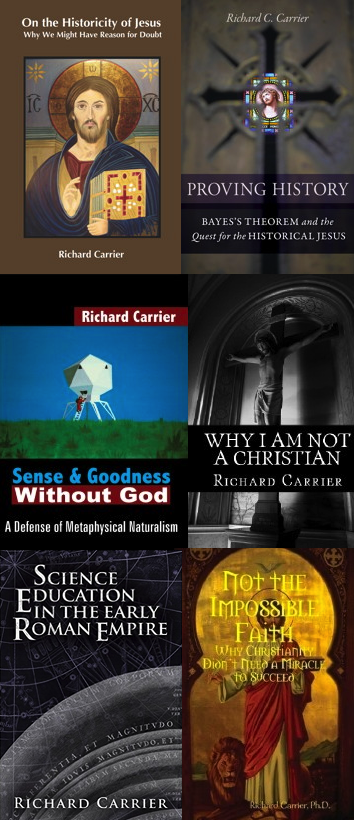
Yes. Sense and Goodness will be retired (I will stop printing it) probably this year. So folks who want to buy one before they are gone (as a piece of history) had best get on that.
It will be replaced with A Better World by end of this year or early next. See Hardback Edition of Hitler Homer Bible Christ for more details.
That is actually draft-completed. I am proofing it now. I expect to send it to the publisher within a month. It actually rewrites or even replaces most of the original. It’s a complete update, accomplishing even more than I predicted in Revisions to Sense and Goodness without God.